
Oyster Mushrooms, nutrients and variety differences
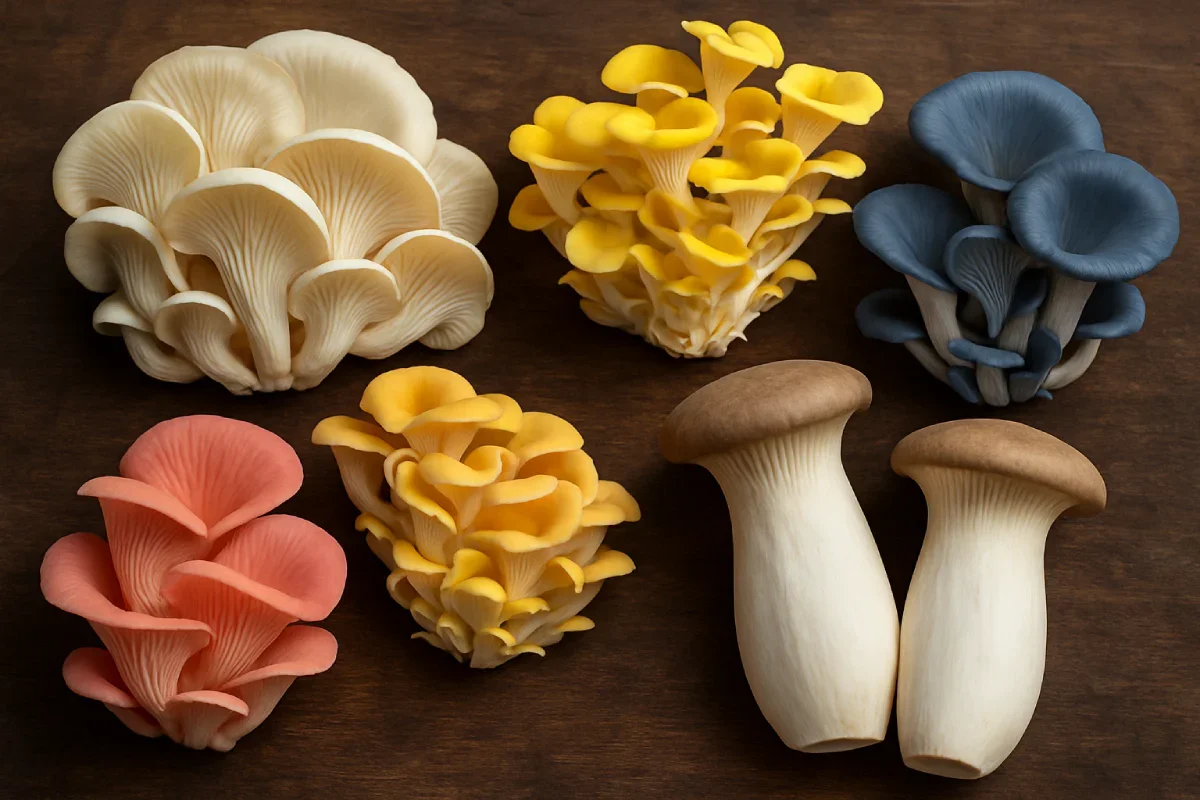
Oyster Mushrooms
Core Health Benefits of Oyster Mushrooms
While each variety looks and tastes a little different, all oyster mushrooms pack a powerful nutritional punch. You can use these universal benefits across all your product descriptions:
Immune System Support: Rich in beta-glucans, which naturally stimulate and strengthen the immune response.
Heart Health: Contains statins (like lovastatin) and high amounts of soluble fiber that help regulate and maintain healthy cholesterol levels.
Antioxidant Powerhouse: Packed with ergothioneine, a unique antioxidant that protects cells from oxidative stress and helps combat inflammation.
Nutrient-Dense: An excellent source of B-vitamins (niacin, riboflavin, and pantothenic acid), iron, potassium, and plant-based protein.
Variety-Specific Profiles
1. Grey Oyster Mushrooms (Pleurotus ostreatus)
The quintessential oyster mushroom—classic, dependable, and incredibly versatile.
Flavor Profile: Mild, earthy, and distinctly woodsy with a subtle, savory sweetness.
Texture: Meaty and velvety when cooked. It holds its shape beautifully, making it an excellent all-purpose mushroom.
Best For: Sautéing, throwing into soups or stews, roasting, and incorporating into classic pasta sauces or risottos.
2. Blue Oyster Mushrooms (Pleurotus columbinus)
A stunning variety that develops deep, slate-blue caps when grown in cooler temperatures.
Flavor Profile: Richer and deeper than the classic grey variety, offering a robust, complex umami flavor with a faint, pleasant anise (licorice) undertone.
Texture: Particularly thick and meaty. The stems retain a pleasant chewiness that mirrors meat very well.
Best For: Searing as a steak substitute, heavy stir-fries, grilling, or any dish where you want the mushroom to be the main star.
3. Pink Oyster Mushrooms (Pleurotus djamor)
A vibrant, tropical variety that looks like pink coral clusters and brings a major "wow" factor to the table.
Flavor Profile: Savory, pungent, and distinctly woody. When cooked until crispy, many people find its flavor profile remarkably reminiscent of bacon or ham.
Texture: Fleshy but thinner-capped than grey or blue oysters. It crisps up exceptionally well.
Best For: Making plant-based "bacon" bits, frying into crispy clusters, or tossing into tacos and summer stir-fries. (Note to customers: The beautiful pink color fades to a golden-brown when cooked!)
4. Golden Oyster Mushrooms (Pleurotus citrinopileatus)
Bright, sunny, and delicate, these vibrant yellow clusters look like blocks of gold.
Flavor Profile: Distinctly nutty and aromatic, with a milder, more delicate umami flavor compared to the blue or grey varieties. Some chefs note a subtle aroma akin to roasted cashews or red wine.
Texture: Delicate, fragile, and velvety. They cook much quicker than other varieties and can become beautifully crisp around the edges.
Best For: Light stir-fries, delicate cream sauces, garnishing finished dishes, or briefly sautéing to preserve their nutty character.
The Secret to Perfect Oyster Mushrooms: Because oyster mushrooms have a high water content, avoid washing them under running water. Instead, gently wipe them with a damp paper towel. For the ultimate texture, sear them in a hot, dry pan first to evaporate their natural moisture. Once they start to turn golden-brown, add your favorite cooking oil or butter, garlic, and herbs to lock in that incredible flavor!